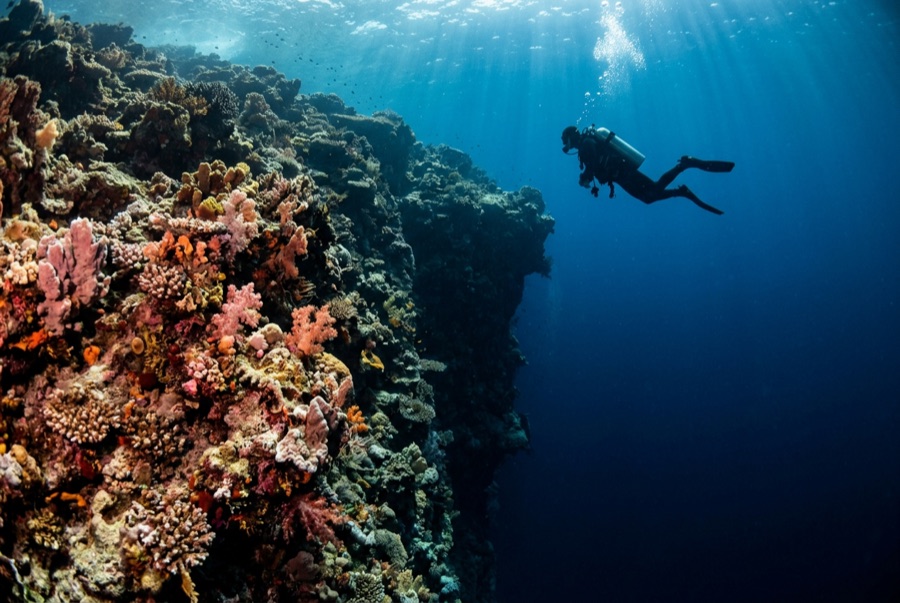
Koh Bon West Ridge
La profundidad es el rango desde la cima del punto de buceo hasta su máximo habitual; la "certificación recomendada" es el nivel que los operadores suelen pedir según las agencias principales, no una norma legal. Las corrientes y la visibilidad cambian a diario, así que trata todo esto como rangos de planificación.
Koh Bon's western ridge is Thailand's most reliable manta station. The limestone spur steps down from the island to a nose at around 18-25 m where cleaning stations operate, and reef mantas arrive on their own schedule to bank in slow circles overhead, sometimes one, sometimes a squadron that stays the whole dive. Etiquette is drilled: hold the reef side, stay low, let the animals run the geometry. Manta-less days still pay in yellow soft coral on the ridge's north face, octopus in the rubble, and napoleon wrasse cruising the steps. Liveaboards revisit until the mantas oblige.
El momento por el que vienes: Reef mantas at cleaning stations, a diveable ridge line in all currents, repeat-visit rhythm
Topografía: Limestone ridge stepping down to a deep point
Corriente: The ridge nose catches flow from both sides; mantas prefer it that way.
Lo que debes saber antes de tirarte al agua
Riesgos: Current at the nose and depth creep following mantas off the ridge.
Conservación: Cleaning stations fail when divers crowd them; the low-and-still protocol is enforced by every good crew.
Nitrox: Vale la pena aquí: los perfiles están en el rango donde el nitrox amplía de forma significativa el tiempo sin parada (con la formación necesaria para usarlo).
A quién encontrarás
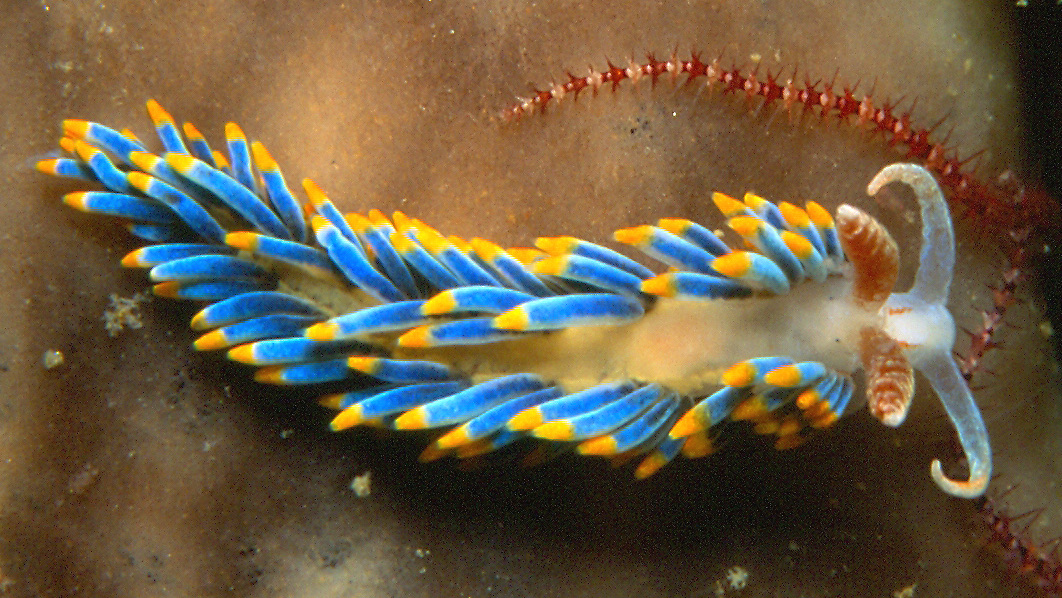
Nudibranchs
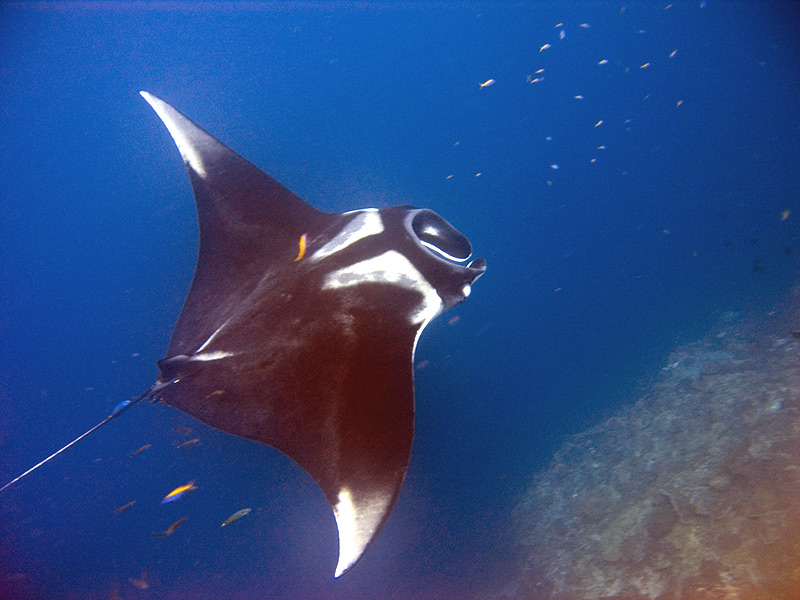
Oceanic Manta Ray
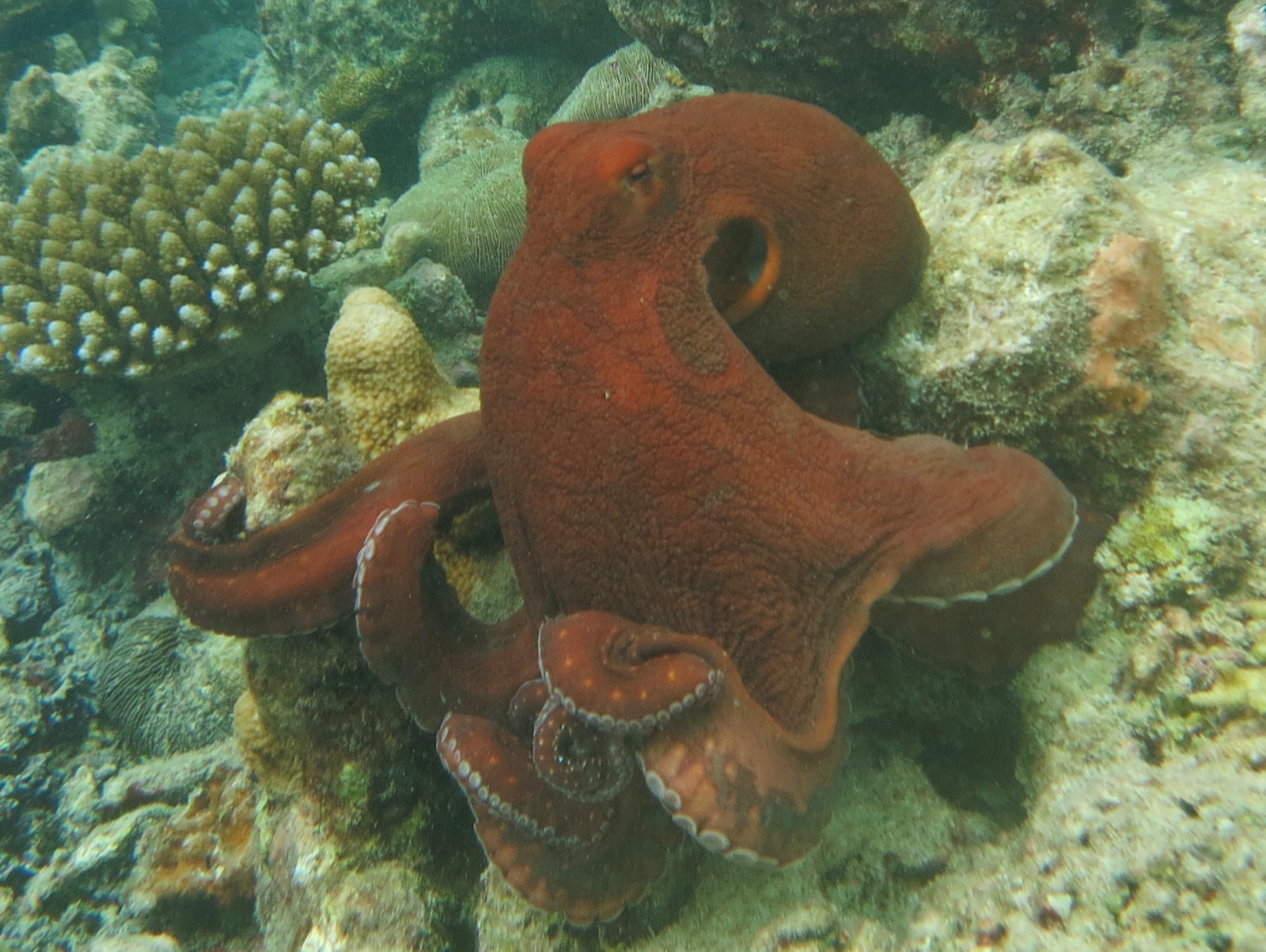
Common Reef (Day) Octopus
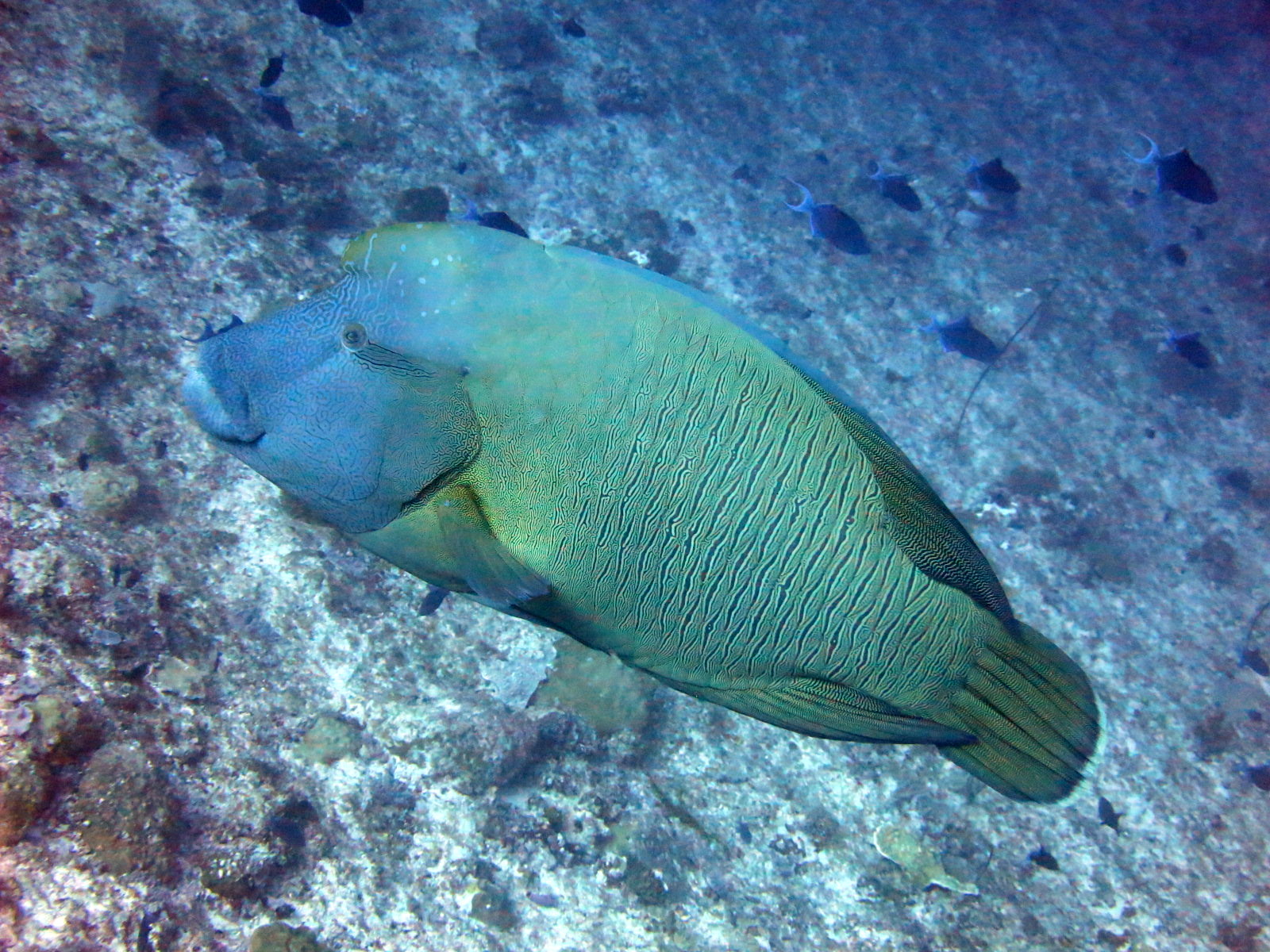
Napoleon (Humphead) Wrasse
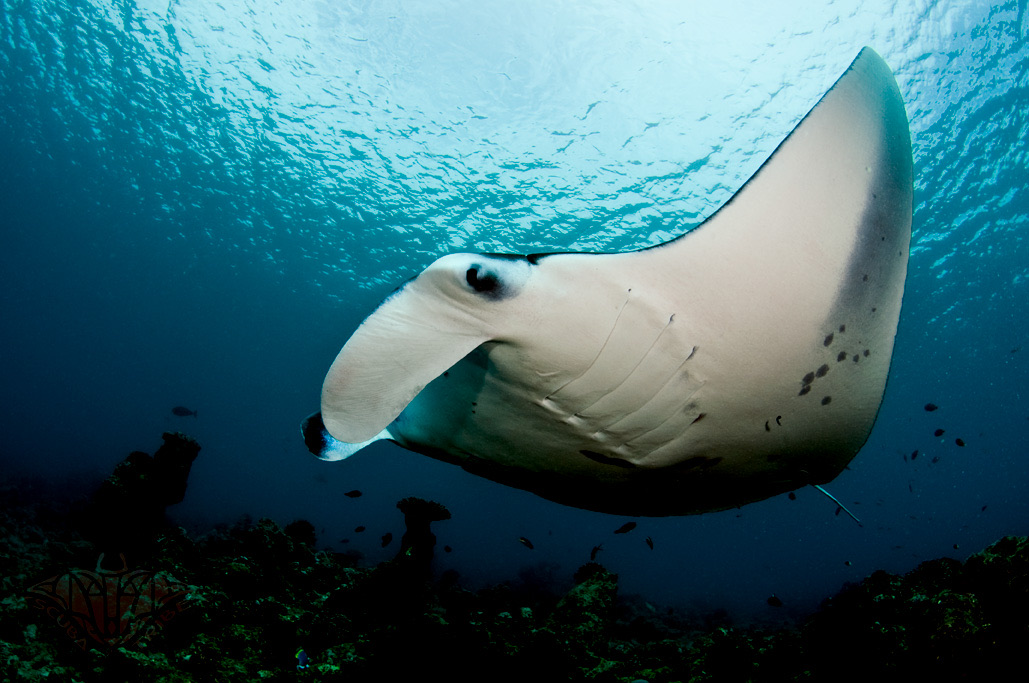
Reef Manta Ray
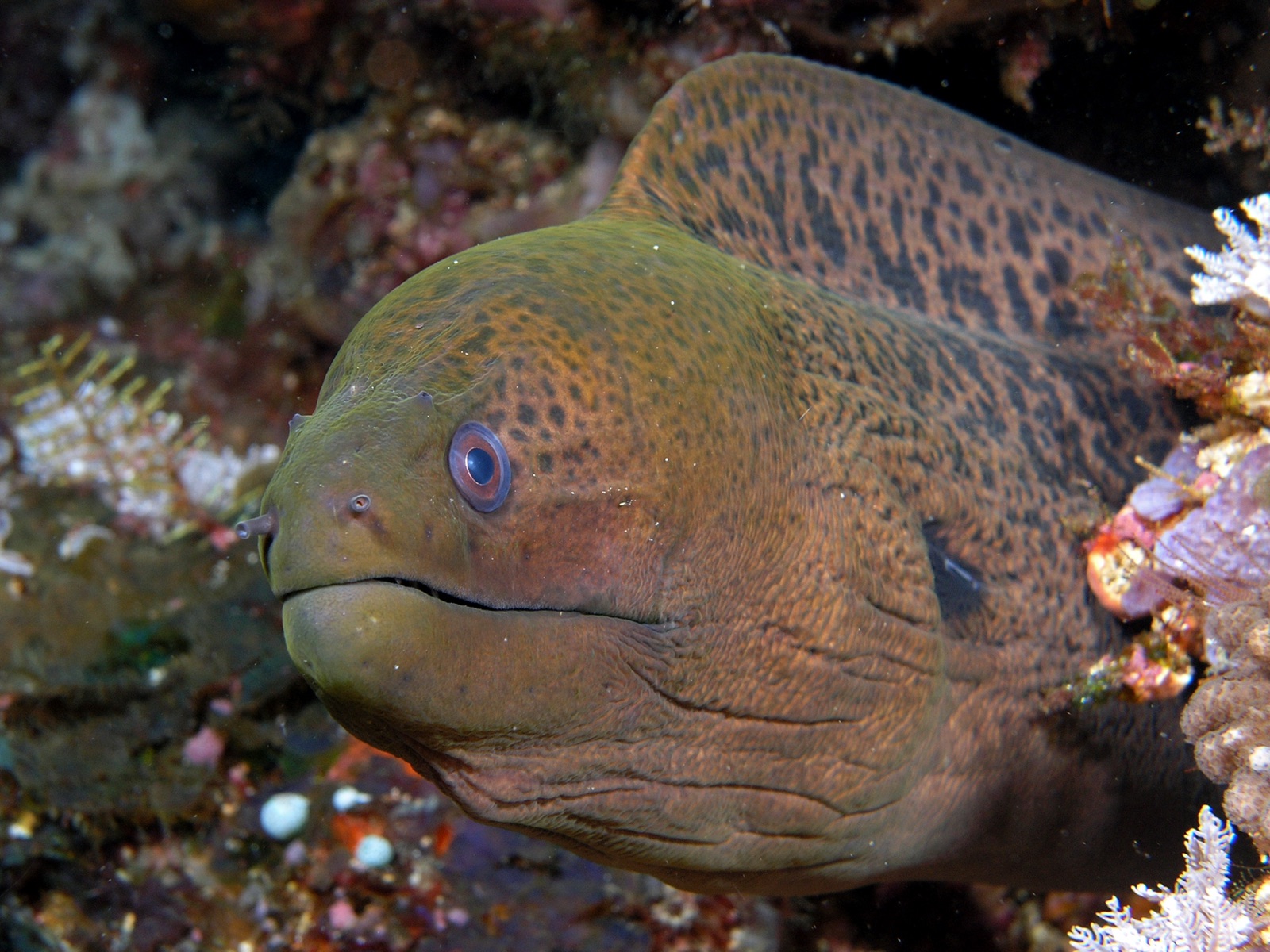
Giant Moray Eel
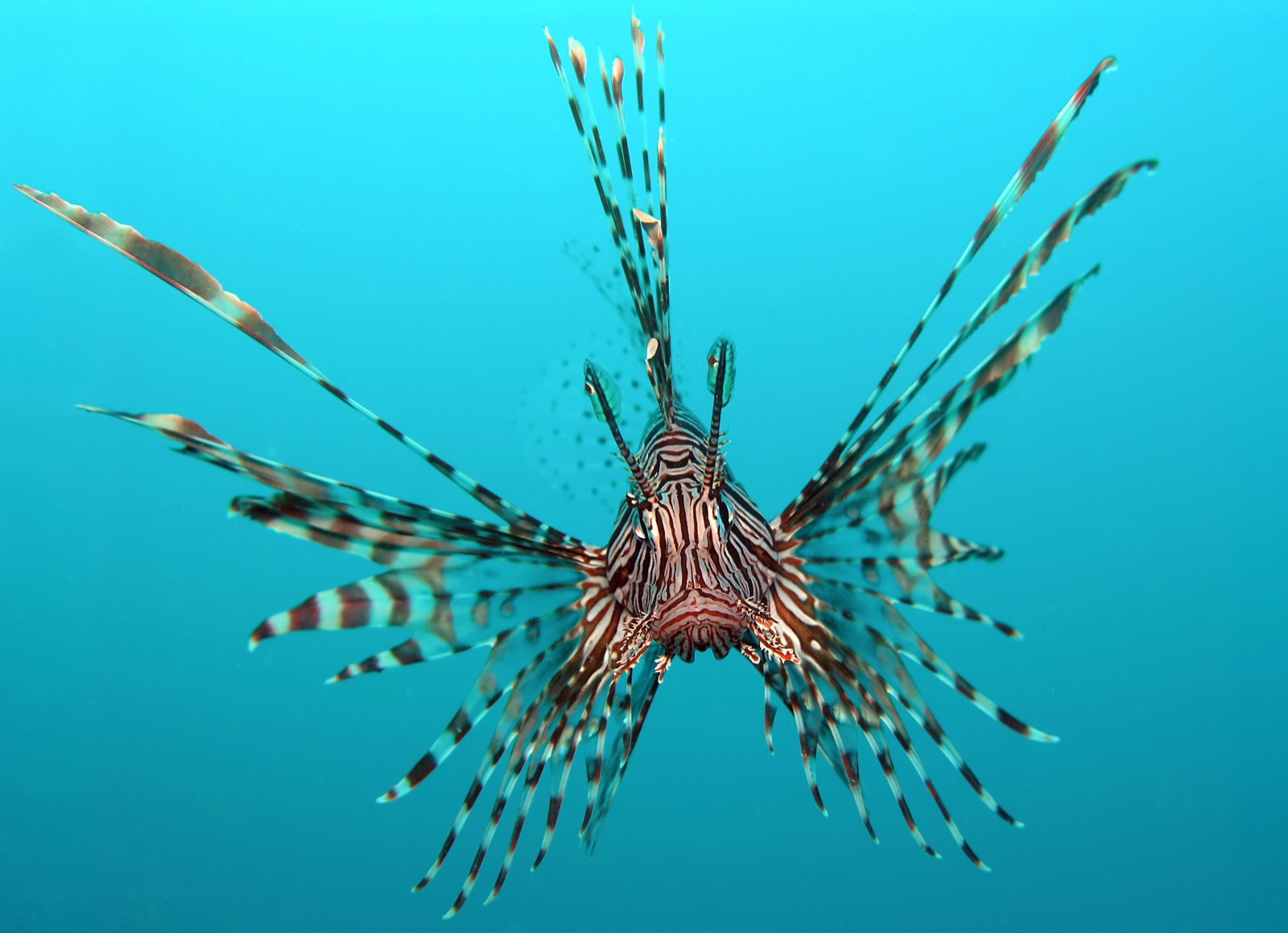
Lionfish
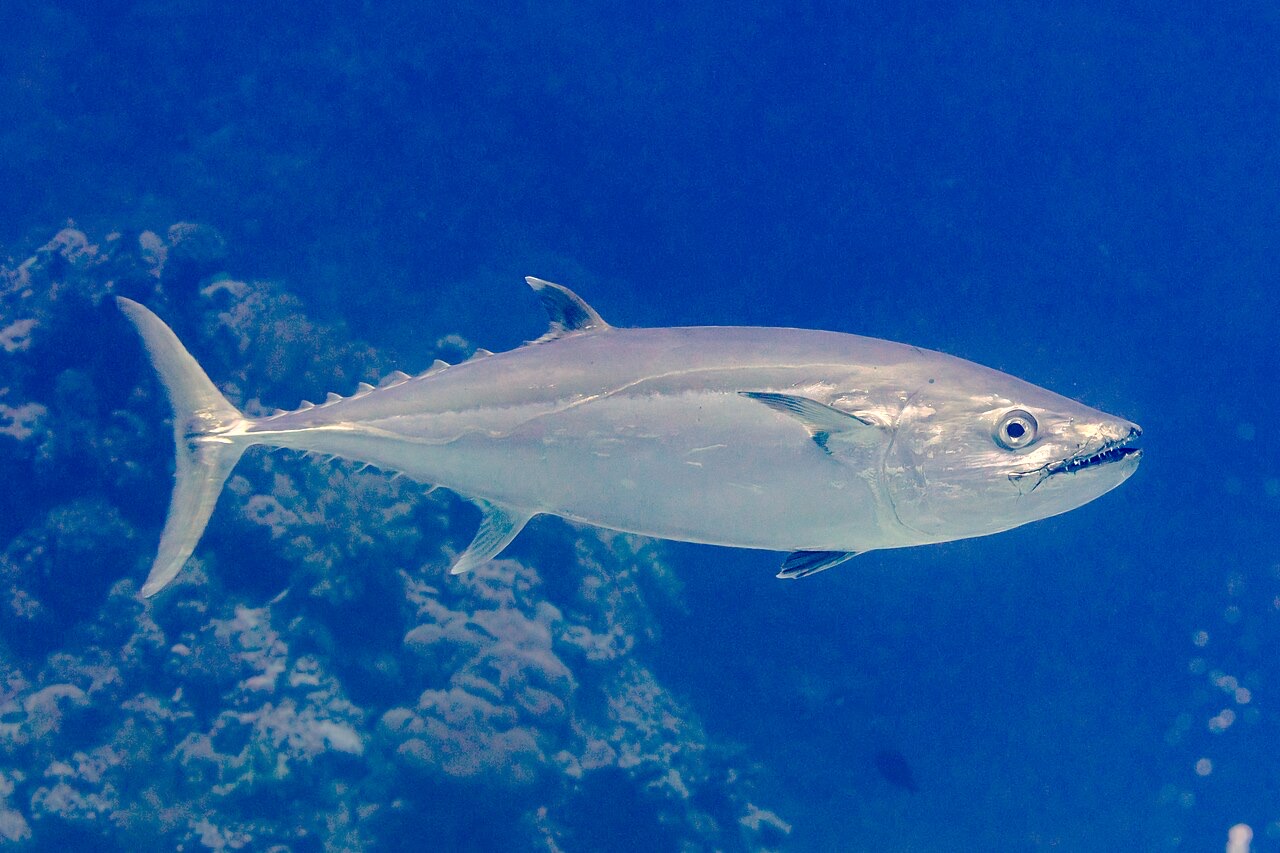
Dogtooth Tuna
También registrado cerca
Las especies "aquí registradas" fueron añadidas por nuestros editores a partir de las fuentes de esta página. Los recuentos son registros de ocurrencia de GBIF: observaciones anotadas en un radio de unos 5 km de la posición registrada desde 1990, cotejadas únicamente con las especies de nuestro catálogo. Muestran lo que se ha avistado allí, no una garantía de lo que verás.
Para fotógrafos
Gran angular: ★★★★★ · Macro: ★★☆☆☆ (valoración de 1 a 5 de los editores sobre lo que ofrece este sitio para cada estilo de fotografía)